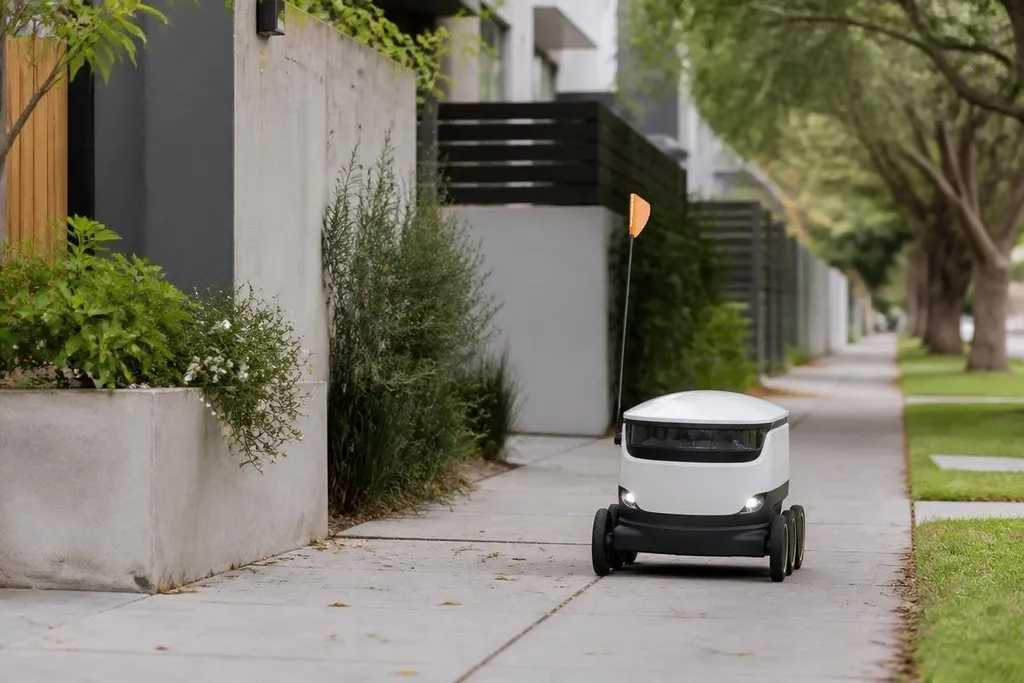
A delivery robot moves a small order from a local site to a nearby home, office, or pickup point. Its value comes from handling short trips that still take a person away from other work.
- Short routes suit low-speed autonomous systems
- Curb access and weather can decide the result
- A supervised rollout is safer than a wide launch
The cost sits at the curb
The last mile looks short on a map, but it can take a large share of a delivery operation's time. A person may spend much of a trip walking from a vehicle, finding an entrance, waiting for a lift, and returning to the route.
A robot changes that labor pattern. It can carry one order at a time, follow a mapped route, stop at a marked location, and wait for the customer to collect the package. The value depends on how many trips it can complete without a person taking over.
That makes route design more important than top speed. A robot that works well on a compact campus may struggle across busy crossings, steep paths, poor pavement, or buildings with locked doors.
How the robot gets the job done
Most delivery robots combine cameras, LiDAR, wheel sensors, maps, and remote supervision. LiDAR measures the distance to nearby objects, while cameras help classify what the robot sees. The software then chooses a path and slows or stops when the route changes.
Remote staff still matter. They may watch several robots, answer a blocked-route alert, or guide a robot around an unusual obstacle. That person isn't handling every metre of every trip, but their time remains part of the operating cost.
The handoff also needs a clear process. A customer may open a locked compartment with a code, meet the robot at a set point, or collect the order from a staffed location. Each method changes the wait time and the number of failed deliveries.
Those wait times need a real route behind them. Delivery robot reports from Robot24.com can tie the robot to its route, date, handoff method, and failed deliveries before the next section asks where these machines fit.
Where delivery robots make sense
The strongest fit is a repeatable route with known drop-off points and enough order traffic to keep the robot moving. A university campus, hospital site, business park, or apartment complex may offer that setting, though each has its own access rules.
Weather and public behaviour can change the result. Rain may affect sensors or cargo protection. A crowded footpath can force the robot to stop often. A person who moves a barrier, blocks a ramp, or opens a compartment for someone else can also create a safety or security problem.
These limits don't make the idea useless. They define the routes worth testing first. A delivery operator should pick one area where the robot has a clear job, then measure completed handoffs, remote interventions, waiting time, and damaged orders.
What remains unproven
A short demonstration can show that a robot reaches one destination. It doesn't show how the system performs over a full operating period with blocked paths, missing customers, poor weather, and changing traffic.
The harder question is labour cost. If a remote supervisor must watch one robot closely, the savings may be small. If one person can safely oversee several robots, the numbers may improve, but that ratio needs site data rather than a product claim.
Public acceptance also affects the result. A robot that stops often, blocks a path, or gives unclear instructions will create work for staff and complaints from nearby people. Good design includes the sound, lights, screen messages, emergency stop, and rules for human help.
I'd support delivery robots on fixed routes where a person can reach them quickly, but I'd skip a broad public rollout without measured handoff and intervention data.
A practical rollout check
Use this list before approving a pilot:
- Map the route: record crossings, ramps, doors, lifts, loading areas, and places where the robot may stop.
- Set the handoff: choose who opens the compartment, where they wait, and what happens after a missed collection.
- Count interventions: log every remote assist, blocked path, emergency stop, and return to base.
- Check the weather: test the route under the conditions the service will face, including rain and low light.
- Price the supervision: include the people who monitor alerts, answer calls, recover robots, and handle failed orders.
- Set a pass mark: decide the required completed deliveries and maximum intervention rate before the pilot starts.
The next step is a small route with clear boundaries and published measures. Delivery robots become useful when those measures show that the robot removes work without moving the same work to a remote desk.